Search Results: “Nutritional research”

Smart Spaces for Smarter Studies

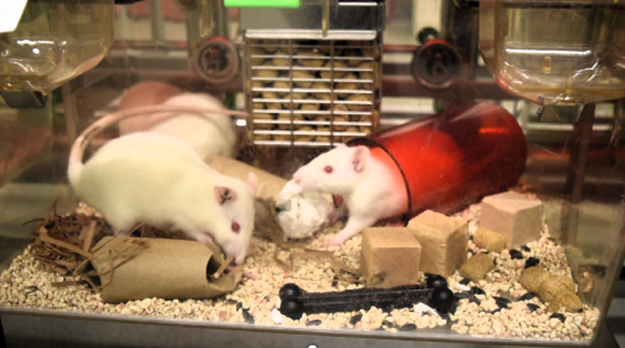
Animals needed for research are provided with an environment that allows them to engage in natural behaviors. Housing for rats provide the opportunity for climbing, foraging, standing on hind-limbs, gnawing and socializing. Optimal environments reduce stress and support overall health. In drug safety studies, where scientists assess how…
Playtime and Enrichment

Play is more than just fun for dogs—it provides opportunities for exercise, exploration and social interaction. Enrichment programs for dogs in research can include toys, play structures, time with other dogs and positive interactions with caregivers. Providing different types of enrichment helps give dogs opportunities to express normal…

Room to Run

Exercise is an important part of maintaining a dog's physical and behavioral health. Dogs in research are provided opportunities for exercise appropriate for their individual needs. Time in larger spaces can also provide opportunities for exploration, play and social interaction - all important components of a comprehensive animal…

Understanding Endometriosis with Rhesus Macaques

Humans aren't the only primates that can develop endometriosis. Rhesus macaques can naturally develop the disease, with many similarities to endometriosis in women. Because rhesus macaques also have menstrual cycles similar to ours, studying endometriosis in these animals can help scientists investigate how the disease develops and progresses…

Pigeons and Perches

Male and female Rock Doves (pigeons) in this research facility raise their babies together in a large, open, indoor aviary. The aviary includes perches, swings, water baths, nest bowls, and foraging opportunities to stimulate the birds' natural behaviors. Parents will hatch one to three squabs (baby pigeons) on…