Search Results: “Heart research”

Speak Up For Research!

Speaking out and drawing on your own personal experiences is an essential and effective way to advocate for medical progress. Whatever your role is in the advancement of health for people and animals, everyone can speak up for research to ensure the continued quest for cures and treatments…

Research Ferrets Co-nursing a Litter

Jills – female ferrets – are incredibly friendly and social and often sleep cuddled together. Research ferrets are housed so that they can exhibit their natural behaviors, keeping them happy and healthy.  Jills with litters spend most of their time in the nests nursing and cuddling with kits.…

Research Sheep Colony

Sheep thrive in social groups of at least five members. Research facilities strive to design housing that best meets the needs of their animals.  This flock room is lined with hay that is changed every other day allowing the sheep to graze as they would naturally on a…

Sadie the Research Cat

Sadie is part of a research study to develop more effective analgesics for cats. There are very few analgesics approved for cats even though there are over 74 million pet cats in the United States.   Anesthesia and analgesia are challenging in cats for a variety of reasons. Researchers…

Growing Up in Research

Like all newborn mammals, rat pups rely heavily on their mothers early in life. They are born with their eyes and ears closed and depend on their mother for milk, warmth and care as they grow and develop. During these early weeks, pups remain with their mother and…

Rhesus Macaques and HIV Research

Rhesus macaques have played an important role in HIV/AIDS research. While HIV infects people, a related virus called simian immunodeficiency virus (SIV) infects nonhuman primates. Scientists can also study a virus called SHIV, which combines components of HIV and SIV. Research with rhesus macaques has helped scientists better…

Pigs and Diabetes Research

Pigs share several important similarities with people that make them valuable in diabetes research. Their digestive system, metabolism and pancreas have features that can help scientists investigate how the body regulates blood sugar and what happens when that regulation breaks down. Pigs have also contributed to the development…

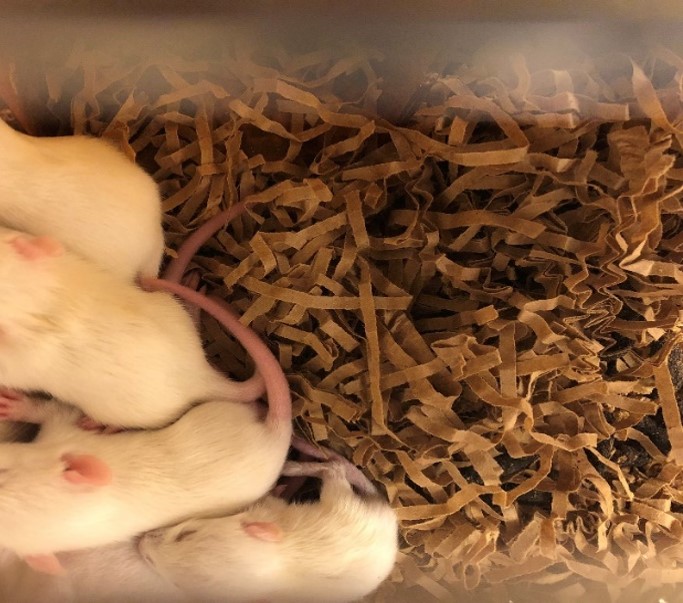
Litter of Transgenic Rats

These adorable transgenic baby rats have modified DNA to help scientists understand how genes affect health and disease. They give researchers an important way to study diseases, learn how they develop, and explore potential new medicines and treatments. Transgenic rats are used to study many serious health conditions,…