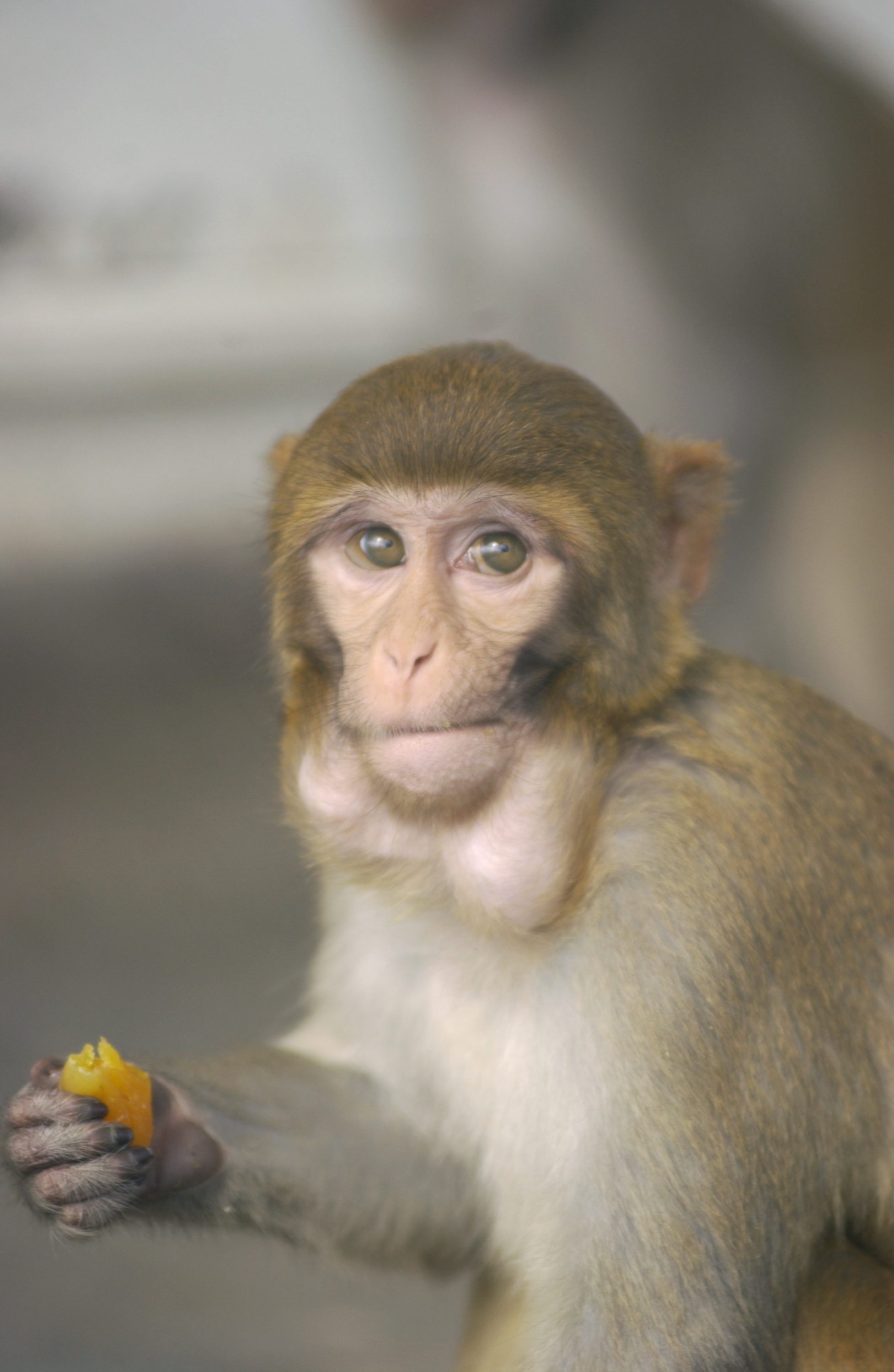
Monkey Eating Oranges
Credit: Photo by Clem Spalding, Courtesy of Texas Biomedical Research Institute
Credit: Photo by Clem Spalding, Courtesy of Texas Biomedical Research Institute
Rabbits, instrumental in developing the rabies vaccine, paved the way for pets in households. Their anatomical and physiological resemblance to humans aids research in cancer, glaucoma, infections, diabetes, and emphysema.
Rhesus macaque monkeys, owing to their anatomical and physiological likeness to humans, have been instrumental in developing life-saving vaccines and treatments like those for polio, smallpox, rabies, and HIV/AIDS. They've also contributed to behavioral discoveries, showing promise in neural mechanism studies.
Videos Animal studies have an important role in identifying new coronavirus treatments and developing vaccines. Here are some videos to help explain: The Many Ways Animal Research Will Help End the COVID-19 Pandemic Released: May 8, 2020 https://youtu.be/vhLT2cxv5Gg YouTube Link / Vimeo Link How Animal Studies Led to…
Xenopus frogs, pivotal in vertebrate embryology, cell biology, genomics, and disease research, aid in understanding embryonic development, environmental adaptation, and the causes of diseases and birth defects.
Pigeons, once prominent in comparative psychology, now serve in neuroscience research, particularly in memory, navigation, and cancer detection studies, offering potential for more efficient cancer screenings and insights into brain mechanisms.
Resources General Dogs General Animal Research Fact Sheets & Websites Animal Research Saves Lives and Cures Diseases Animals Behind Top Drugs Top Animal Research FAQs Dogs Fact Sheets & Websites AMP Dogs in Research FAQ Animals Used in Research: Dog Animalresearch.info - Dog Dogs in Medical Research Dogs…
These lambs are part of a maternal nutrition study. Whenever possible, lambs involved in research studies are raised with their mothers where they undergo normal social and emotional development. If a study requires hand-rearing, it must be approved by the Institutional Animal Care and Use Committee (IACUC), a…
Baboons, closely resembling humans in physiology, serve as vital models in various research areas such as neonatal lung disease, atherosclerosis, pregnancy, nutrition, liver disease, brain imaging, epilepsy, and xenotransplantation.
Hamsters play a crucial role in various research areas like cancer, reproduction, virology, diabetes, and cardiovascular diseases due to their physiological similarities to humans, particularly in lipid metabolism and atherogenesis.
The photos on this website are provided to assist you with your educational needs.

This work is licensed under a Creative Commons Attribution 4.0 International License.EXCEPT where photos include another credit. See About Us page for links to specific photo permissions.